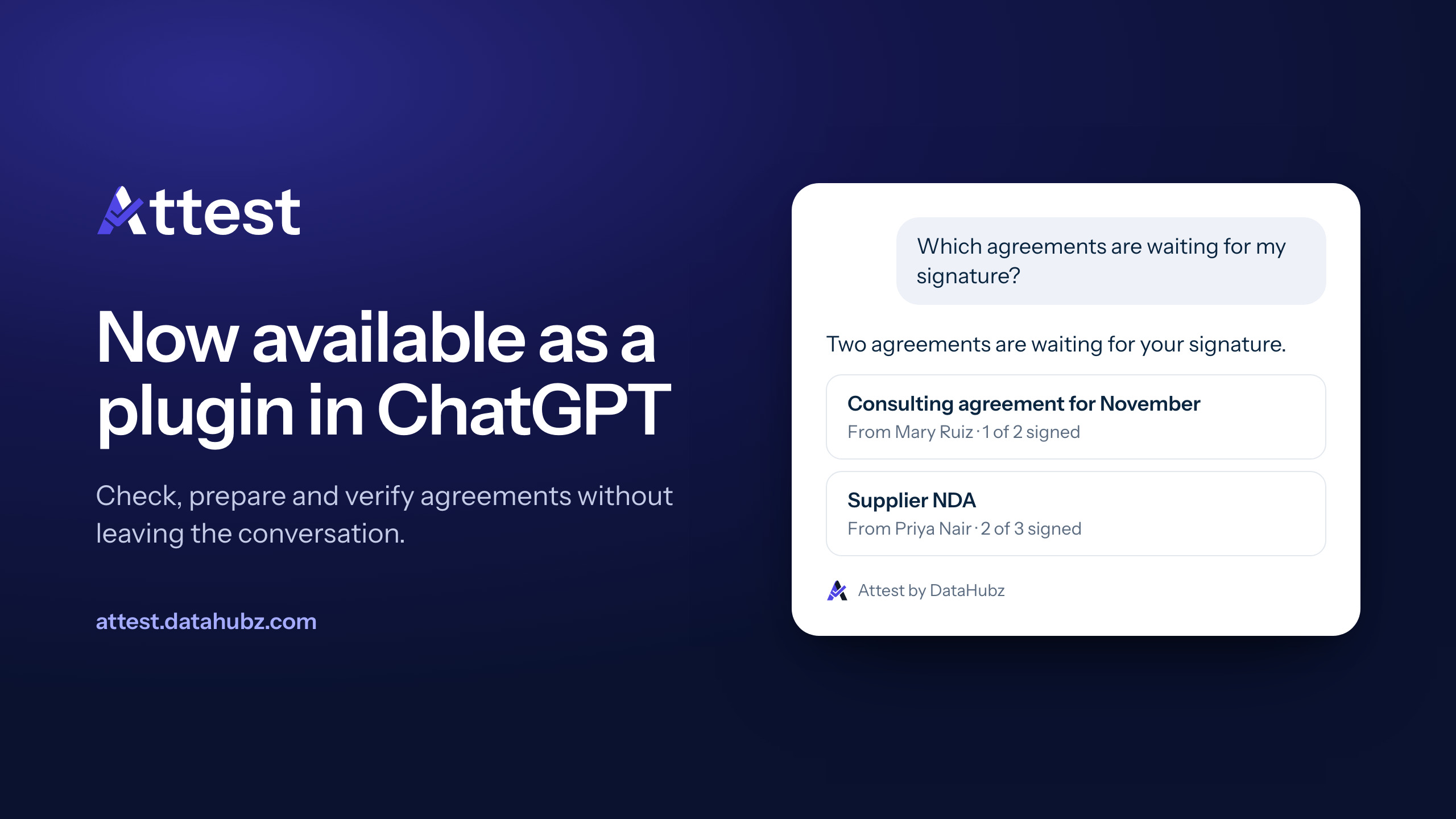
Attest by DataHubz is now available as a plugin in ChatGPT. Connect your Attest account once, and you can check on your agreements, prepare new ones and verify signed documents without leaving the conversation.
What you can ask
"Which agreements are waiting for my signature?" The Attest plugin lists them, with who has signed each one and who still has to.
"Prepare an agreement for Mary Ruiz to sign." The Attest plugin fills in Attest's New agreement form with the title, the signers and a note. You attach the PDF in Attest, where it is encrypted in your browser, and send it.
"Remind the signers of the consulting agreement." The Attest plugin emails each signer who still has to sign their signing link again.
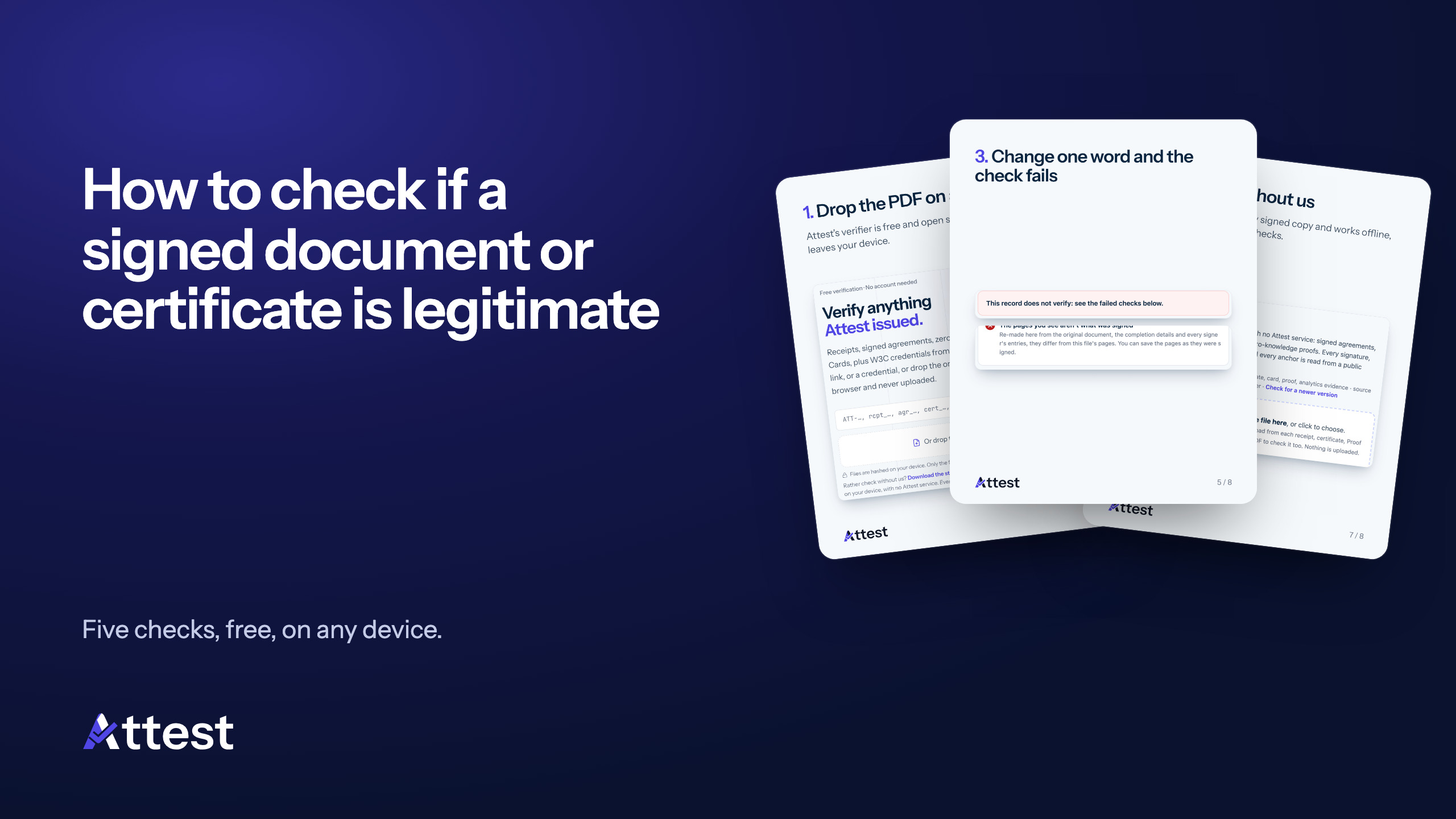
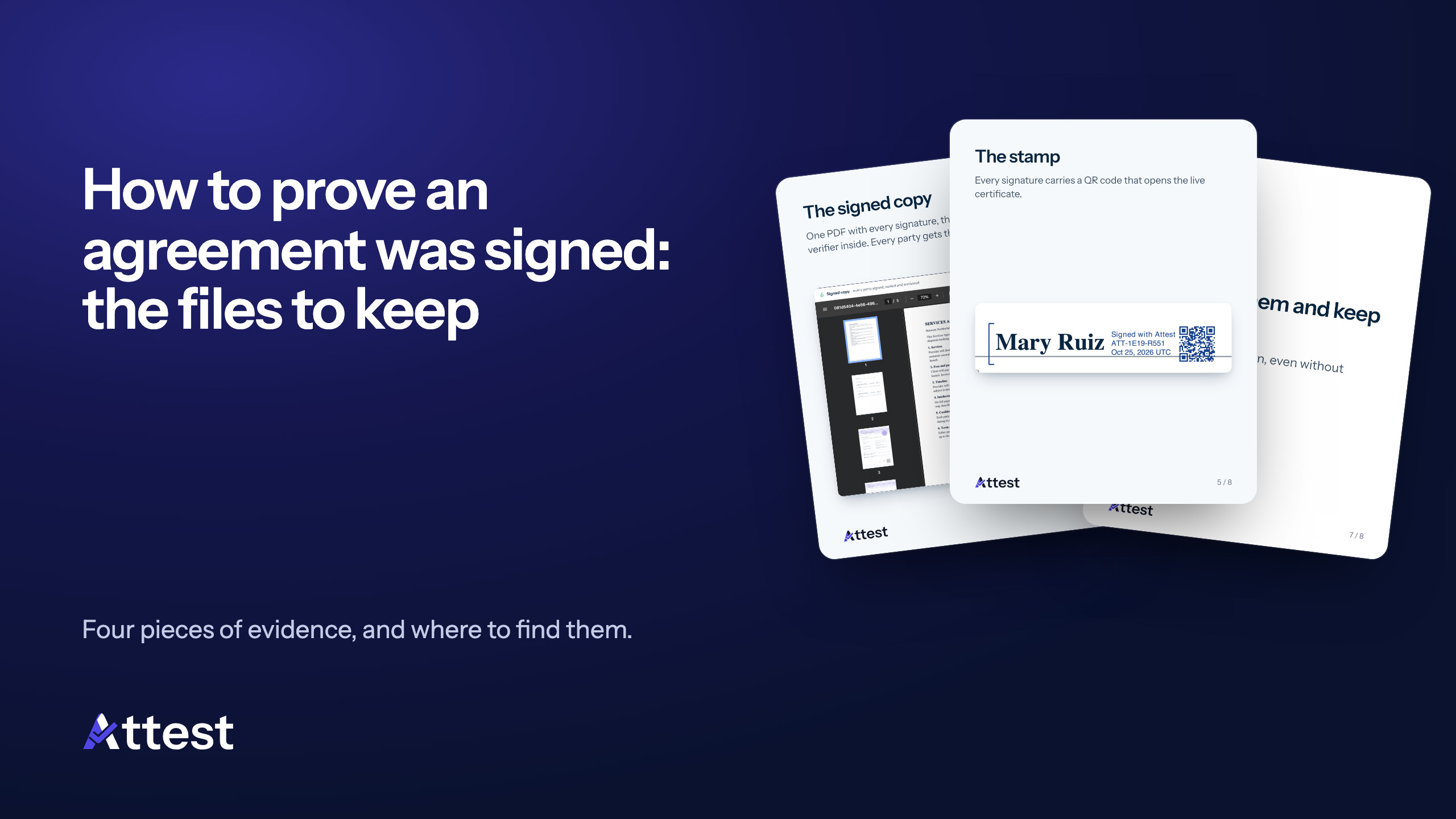
"Can I verify this signed agreement?" Give the Attest plugin the verification code printed on its signature stamps, or the document's SHA-256 fingerprint, and it checks it against the record anchored on Base.
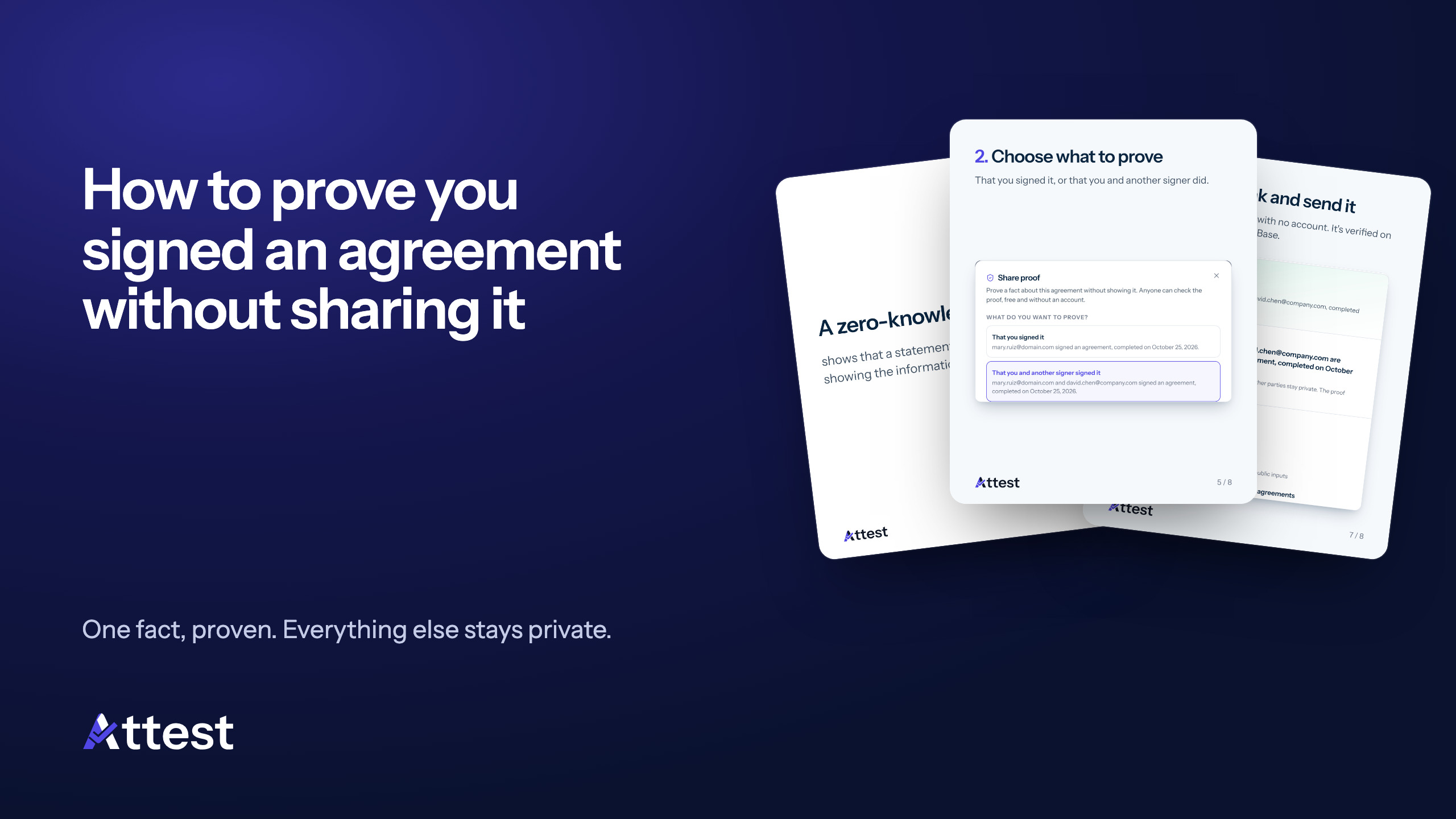
The Attest plugin can also record a receipt that proves a fingerprint existed at a point in time, and create a Share proof: a zero-knowledge proof that you signed an agreement, verified on zkVerify, that reveals nothing else about it.
What stays in Attest
Your documents. Documents are end-to-end encrypted in your browser before they are uploaded. ChatGPT never receives a document's contents.
Signing. Each signer signs in Attest with their own passkey: Face ID, Touch ID, Windows Hello or the device PIN. No assistant, API key or token can sign for anyone.
The connection. You see what the Attest plugin can do when you connect it, and you can disconnect it at any time under Connected apps in your Attest security settings.
Get started
Find the Attest plugin in ChatGPT, by starting a prompt with "Attest," connect your account and ask your first question. The connector guide describes each tool, and the connector privacy notice lists what Attest receives and keeps.
Sign your first document. Your first 2 documents are free.
Attest is part of the Horizen ecosystem on Base, and its zero-knowledge proofs are verified on zkVerify.