Day five of our document signing series closes the week with the most unusual capability in Attest. Today's video shows how to prove that an agreement was signed without showing the agreement.
Proof without disclosure
Many situations call for evidence that an agreement exists, not for the agreement itself:
- A customer asks you to confirm that a data processing agreement is in place.
- An auditor needs evidence that a policy was acknowledged on a given date.
- A partner wants to know that a contract was executed before work starts.
The usual answer is to share the document, or a redacted copy of it. Both expose more than the question requires.
How Share proof works
On any completed agreement, Share proof creates a zero-knowledge proof of one statement: that specific parties signed the agreement on a given date. The proof is verified on zkVerify, a network dedicated to verifying zero-knowledge proofs, and the agreement it refers to is anchored on Horizen.
Before sharing, the sender sees exactly what the recipient will see and what is never disclosed. The recipient opens the proof, verifies it at no cost and without an account, and learns that the statement is true. Nothing else.
The document, its title and its terms remain private.
Why it matters
Zero-knowledge proofs change the default of evidence from disclosure to verification. Instead of handing over a contract so someone can read the part they care about, you give them a proof of that part alone.
Share proof is available on every completed document, on every plan.
The week in review
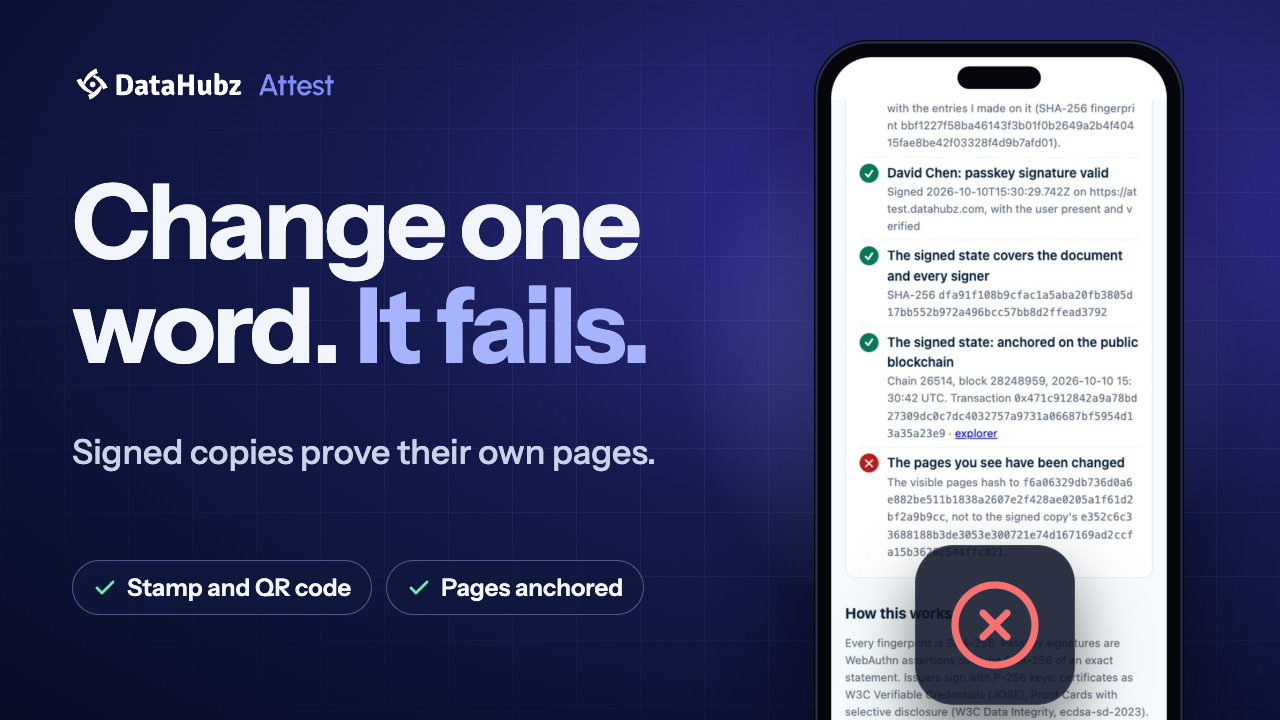
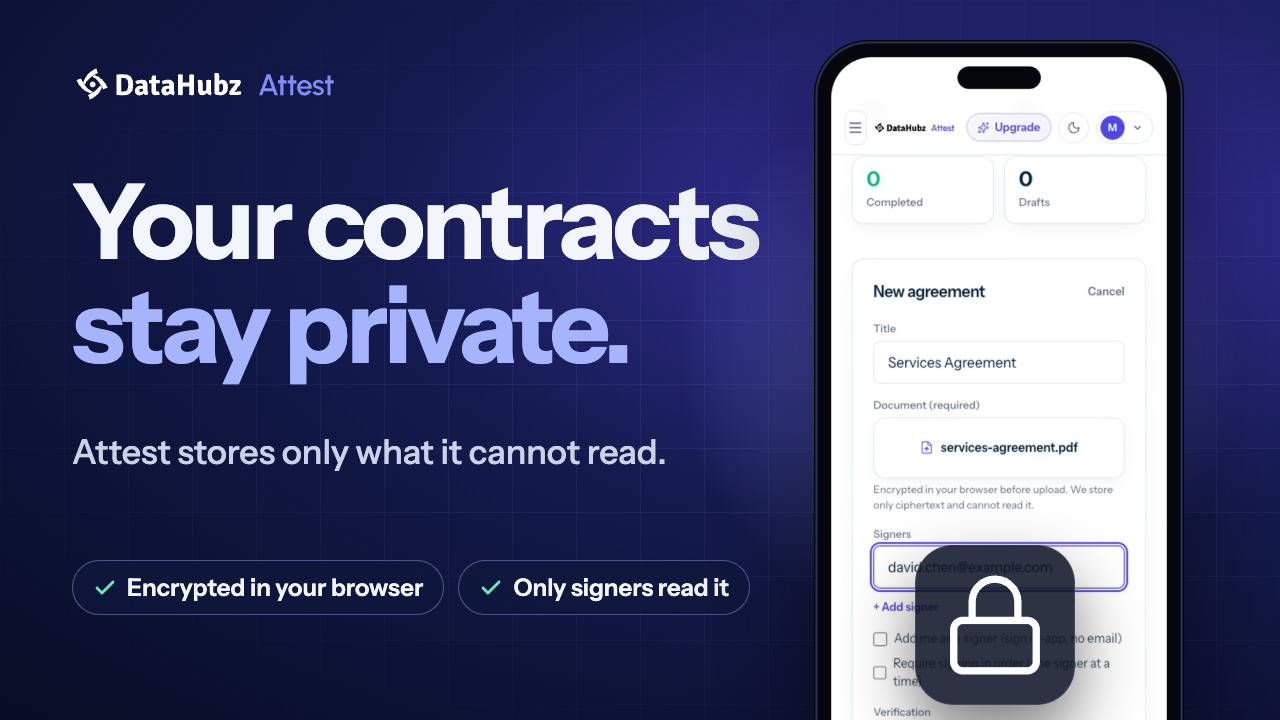
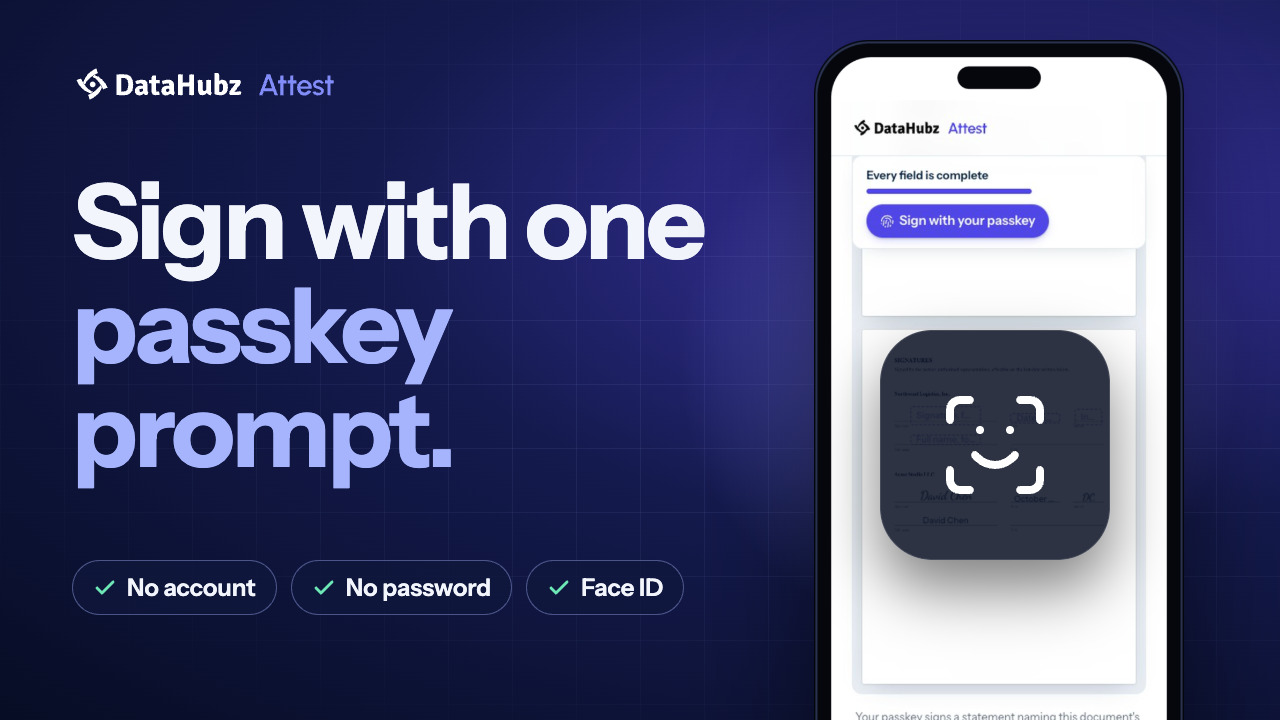
This week we covered what makes a signature on Attest different: the whole service in a minute, a single passkey prompt, contracts encrypted before they leave the browser, a signed copy that proves its own pages, and a proof that reveals nothing else. All the videos are in our video library.
Try it
Sign an agreement, then share a proof of it. Every account can send two documents for free, with no credit card.